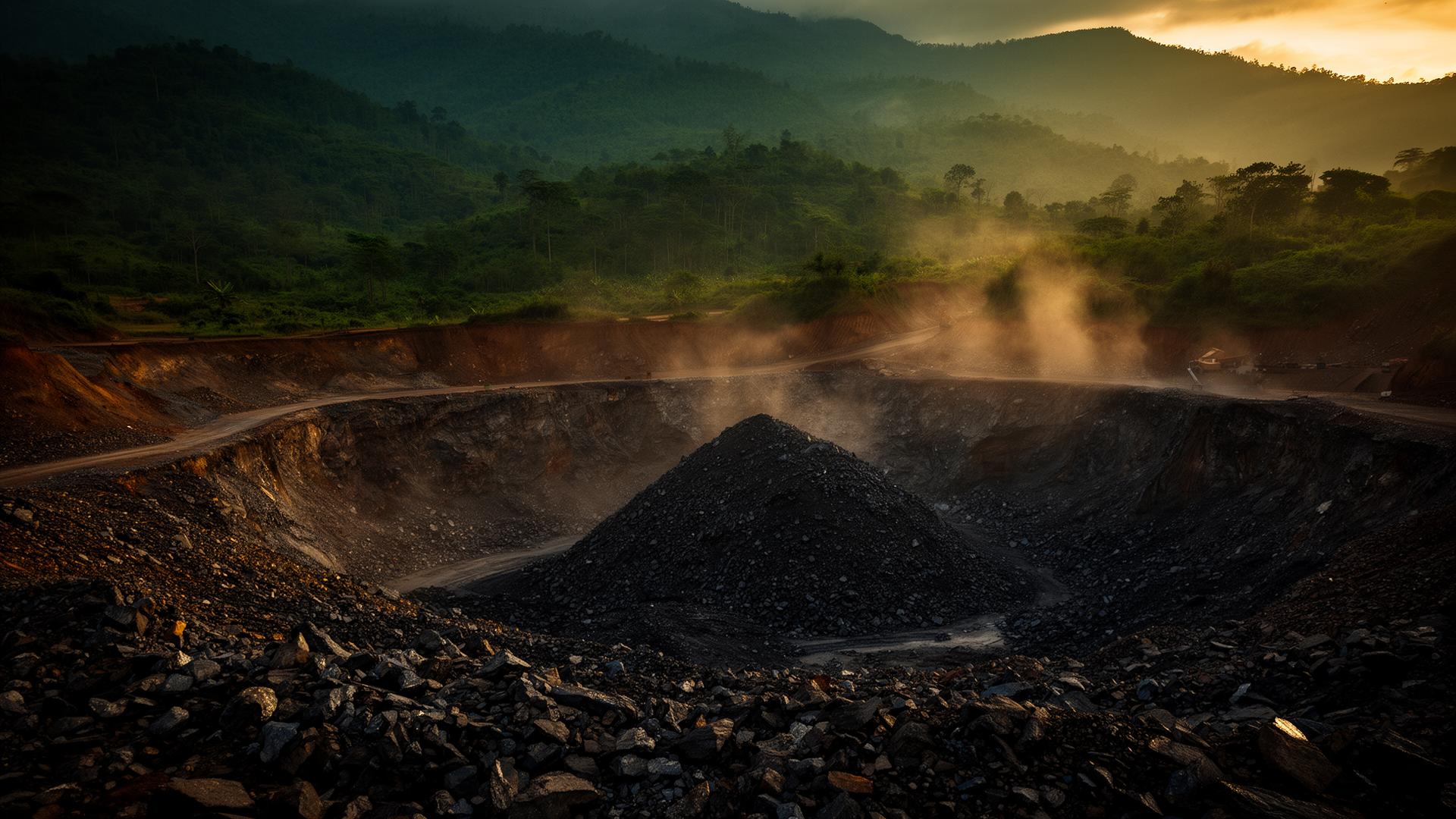
MOROTO — At sunrise on the rust-coloured plains east of Moroto, a thin column of smoke rises from a pit that did not exist eighteen months ago. By eight o’clock, more than two hundred men, women and children are already inside it, sifting gravel by hand and panning the slurry in shallow basins of muddy water. The gold they pull out is rarely larger than a grain of rice. On a good day, a digger earns the equivalent of seven United States dollars. On a bad day, nothing at all.
Six months of reporting across Karamoja — including visits to fourteen mining sites in Moroto, Nakapiripirit, Amudat and Kaabong, and interviews with more than ninety miners, traders, local officials, and company representatives — reveals a sector that has slipped almost entirely outside the state’s line of sight. Production is rising. Exports are rising faster. And the gap between what is dug and what is declared has become impossible to ignore.
Uganda’s Directorate of Geological Survey and Mines lists fewer than thirty active exploration and mining licences across the sub-region. On the ground, The Mineral Bulletin counted at least sixty informal worksites, several operating around the clock under floodlights powered by diesel generators trucked in from Kenya. None of the diggers we spoke to had been issued the artisanal permit introduced under the 2022 Mining and Minerals Act.
“We pay the askari, we pay the man with the metal detector, we pay the broker. By the time we sell, half the gold is gone,” said Lokol, a 34-year-old digger who has worked the pits since 2023 and asked that only his first name be used. He pointed to a row of small wooden kiosks at the edge of the site, each manned by a buyer with a digital scale and a calculator. “They know the price in Kampala. We do not.”
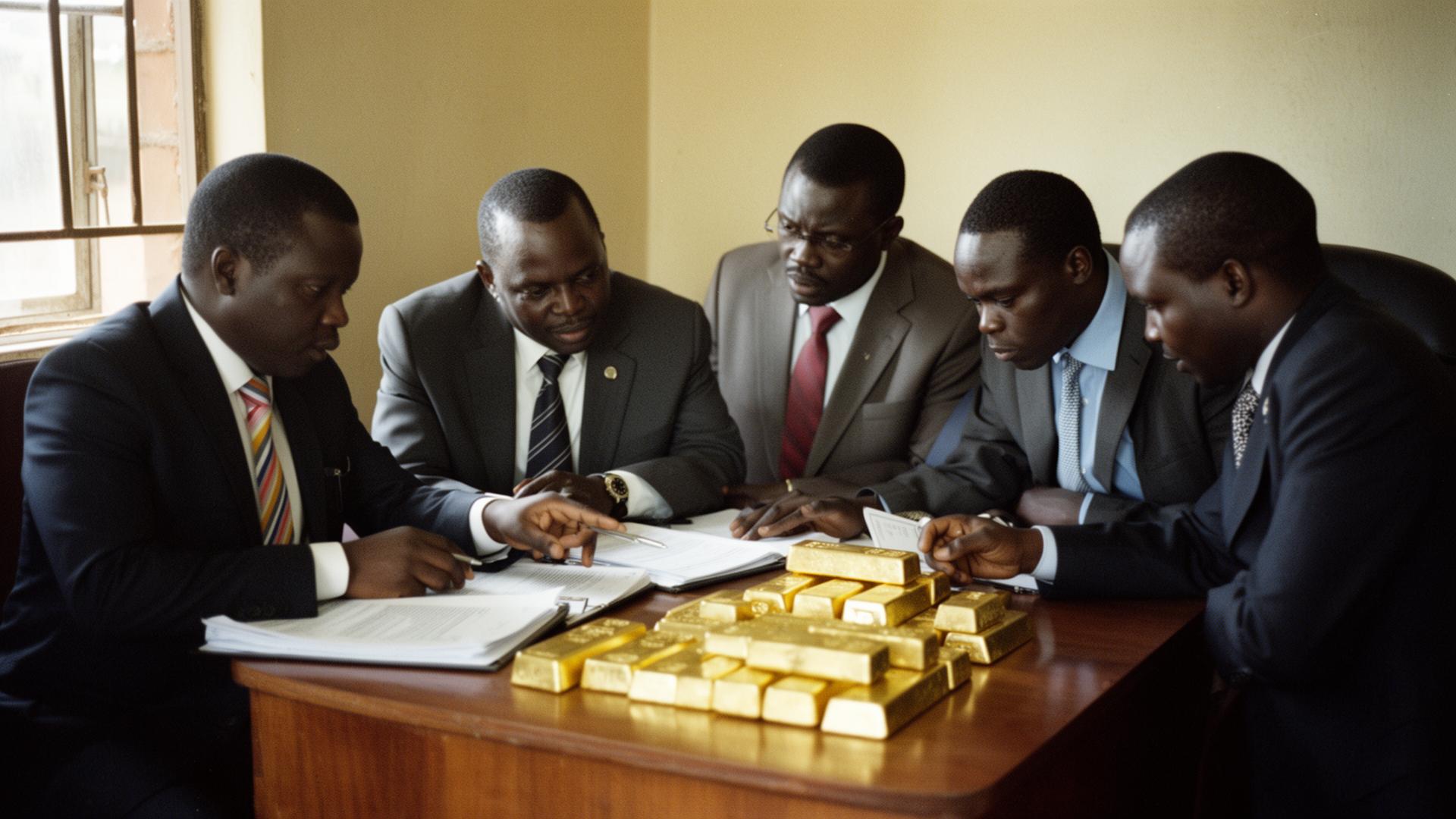
The buyers do know the price in Kampala. Several told us they sell on to a small group of refiners in Industrial Area, who in turn export to Dubai and, increasingly, to refineries in India. Bank of Uganda figures show refined gold accounted for thirty-eight per cent of merchandise exports in the first quarter of 2026 — more than coffee, fish and tea combined. The Directorate’s own production data, by contrast, accounts for less than a fifth of that volume.
Asked about the discrepancy, the Commissioner for the Directorate, Agnes Alaba, acknowledged that “a significant share” of exported gold is not captured at the mine gate. She attributed the gap to under-resourcing, the remoteness of the Karamoja sites, and what she called “the speed at which informal markets adapt.” A new inspectorate, she said, is being stood up with support from the African Development Bank and is expected to begin field operations in the third quarter.
Local leaders are less patient. In Rupa sub-county, where four of the largest pits sit on contested community land, the LC3 chairperson Simon Lochoro described a pattern that has become familiar across the sub-region: a company arrives with a location licence, fences off a section of grazing land, and brings in equipment before any community development agreement has been signed. “We are told the law protects us,” Lochoro said. “Then we are told the law is being updated. Meanwhile the trucks keep coming.”
Two foreign-registered companies — one incorporated in Mauritius, one in the United Arab Emirates — hold the largest concessions in the area. Neither responded to repeated requests for comment. Filings reviewed by The Mineral Bulletin show that both list the same Kampala-based law firm as their local agent, and that their ultimate beneficial owners are not disclosed in any public registry we could access.
What is clear is that the money is moving. What is less clear — and what the next phase of this investigation will examine — is who, in the end, it is moving to.
This is the first part of a three-part series. Part two will follow the gold from the pit to the refinery. Part three will examine the licences themselves.