NAIROBI — Ask a mine manager in East Africa what threatens their cost per tonne this year and the answer is unlikely to be grade, labour or freight. Across operations in Kenya, Tanzania, Uganda and Rwanda, the line item that has moved most is electricity — and the response is a visible shift toward generating it privately.
Processing is where the exposure sits. Crushing, milling and, in the case of hydrometallurgical circuits, leaching and electrowinning are electricity-intensive by nature, typically accounting for between a quarter and a half of site operating cost. Where the grid supplies power at an industrial tariff in the range of 12 to 18 US cents per kilowatt-hour, with unplanned outages measured in hours per week, the arithmetic pushes hard toward self-supply.
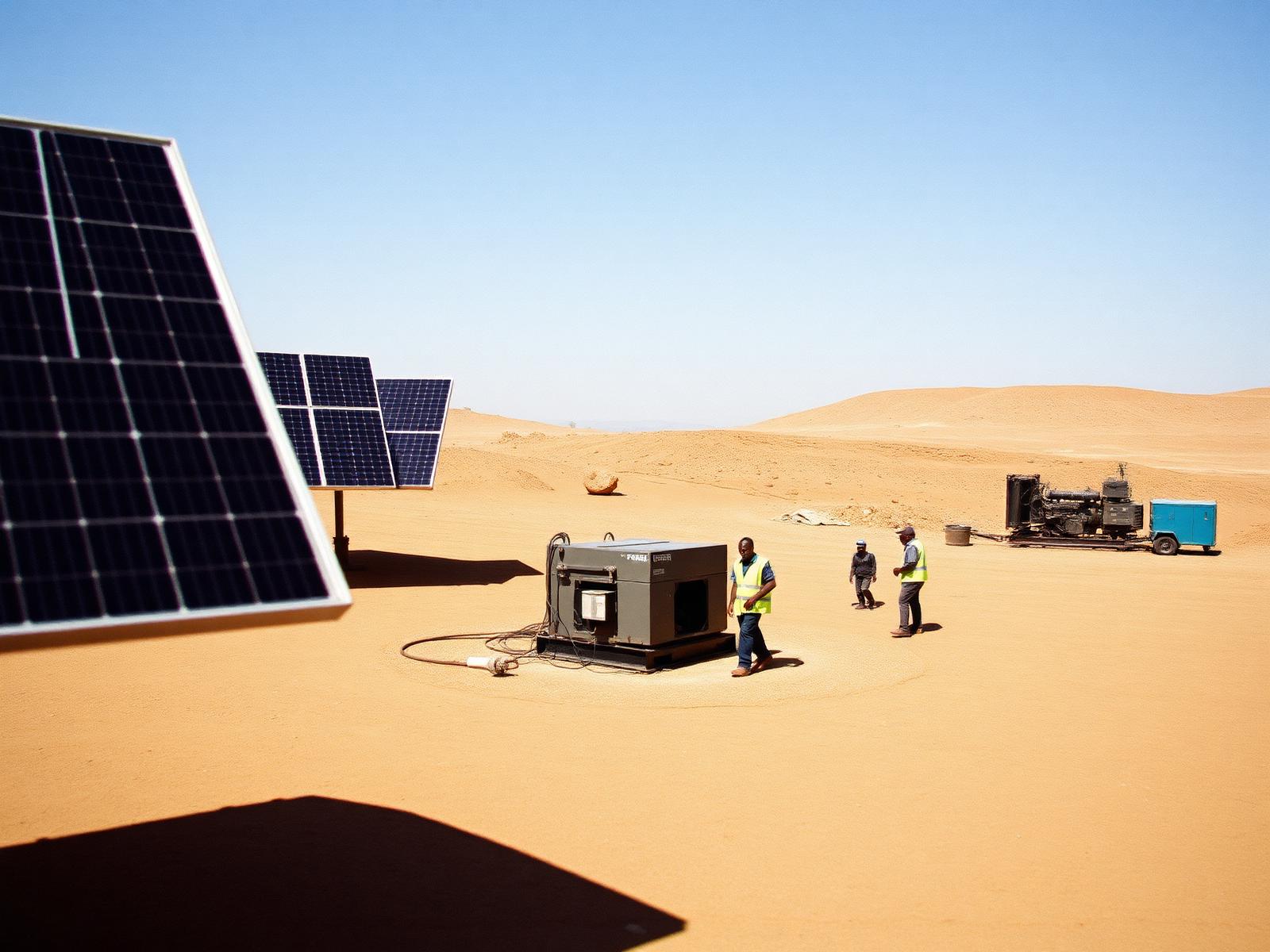
The technology mix has settled into a recognisable pattern: a solar array sized to the daytime processing load, a battery buffer measured in a few hours rather than overnight, and retained diesel or heavy-fuel generation for the night shift and for firming. Recent installations in the region have been contracted at levelised costs below the equivalent industrial tariff, before accounting for the value of avoided outages.
Financing has followed. Development finance institutions and specialist independent power producers are now willing to fund captive mine generation on power-purchase terms, taking construction and performance risk in exchange for a long-dated contract with the operator. That structure moves capital expenditure off the mine’s balance sheet at the cost of a fixed obligation that outlives commodity-price cycles.
Utilities are watching the trend with limited enthusiasm. Industrial customers are, in most of the region’s systems, the segment that cross-subsidises domestic tariffs. Losing large loads to captive generation shifts that burden without reducing the utility’s fixed costs, and at least two regulators in the region are reviewing wheeling charges and standby tariffs that would recover part of the difference from departing customers.
The policy tension is unresolved and consequential. Kenya’s framework permits wheeling third-party power across the national grid under negotiated terms; Tanzania and Uganda have moved more cautiously, and Rwanda’s smaller system leaves less room for large loads to exit. Where wheeling is available, a mine can contract a distant geothermal or hydro resource; where it is not, self-supply means on-site solar and fuel.
For projects at the feasibility stage, the practical consequence is that power strategy has moved from an annexe to the front of the study. Several operators now report modelling two cost cases — grid-connected and captive — and treating the spread between them as a primary determinant of whether a project proceeds at all.