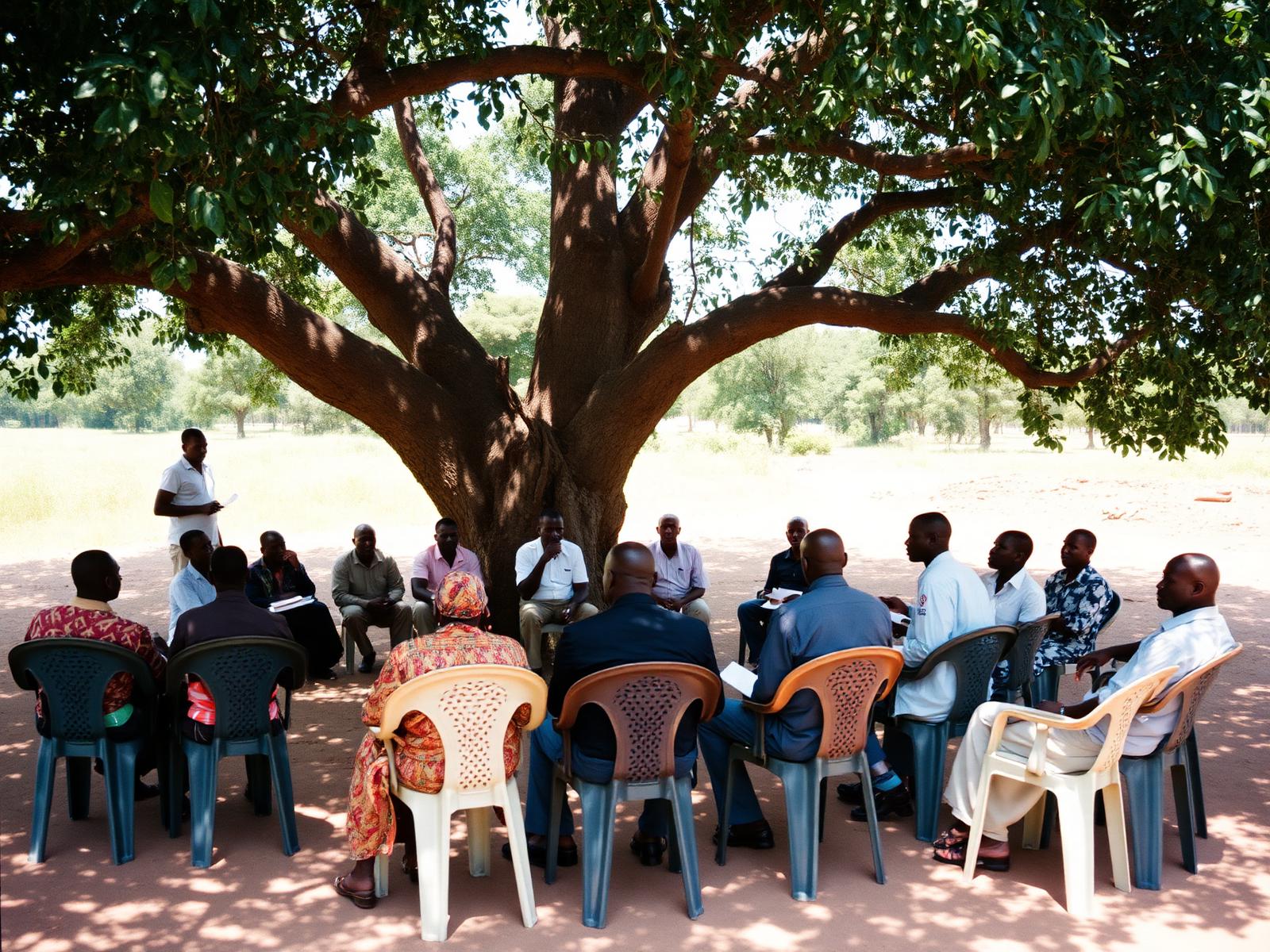
KAGERA / KWALE / HOIMA — The most persistent source of conflict between mining operations and the communities around them in East Africa is not pollution, employment or royalties. It is the price paid for land — and the process by which that price is arrived at.
The Bulletin reviewed compensation schedules, district valuation reports and grievance logs associated with eleven mining and mineral-processing projects across Tanzania, Kenya and Uganda between 2021 and 2026. The records show valuations for comparable agricultural land, adjusted for currency and year, differing by more than a factor of ten between projects — and, in three cases, between phases of the same project.
Part of the spread is legitimate. Land near a trunk road or a growing town commands more than land at the end of a track, and a mature coffee or banana holding is worth more than seasonal cropland. But the reviewed records show the largest driver of variation to be procedural: whether valuation followed a district compensation rate schedule, a market-comparable assessment by an independent valuer, or a negotiated settlement with a community committee.
District rate schedules, used widely because they are fast and administratively defensible, are frequently years out of date. In one Ugandan district, the schedule applied to a 2025 acquisition had last been revised in 2019, a period over which local land transactions recorded at the sub-county level roughly doubled in nominal terms. Households paid at schedule rates were, on the evidence of those transactions, compensated at well under half of replacement cost.
The treatment of perennial crops and structures introduces a second layer of divergence. Valuers apply different assumptions about the productive life of a coffee bush or a mango tree, and about whether compensation should reflect the cost of replacement or the discounted value of lost future income. The gap between those two approaches, applied to a smallholding, is typically larger than the value of the bare land.
Households with unregistered customary tenure fare worst. In every jurisdiction reviewed, statutory frameworks recognise customary interests in principle. In practice, the absence of documentary title slows verification, weakens the household’s position in negotiation, and in several logged cases resulted in compensation for crops and structures but not for the land itself.
Grievance mechanisms exist at all eleven projects, and most conform on paper to the requirements of the lenders financing them. Their performance is another matter. Of 1,140 logged grievances the Bulletin was able to review, 41 per cent were recorded as closed within twelve months. A further 22 per cent remained open beyond twenty-four months, the majority of those concerning valuation disputes — the category the mechanisms are least equipped to resolve, because a genuine disagreement about value cannot be settled by better explanation of the original figure.
Operators, for their part, describe a system that exposes them to risk they cannot manage. “We are required to pay district rates we know are too low, and then we own the consequences of that for fifteen years,” said a community-relations manager at one project, who asked not to be identified. Several companies now voluntarily pay above schedule — a practice that resolves individual cases while widening the inconsistency across the region.
The remedies most frequently proposed are unglamorous and specific: statutory annual revision of district rate schedules; a published regional methodology for perennial-crop valuation; independent valuation funded by the operator but instructed jointly; and a binding third-party determination route for valuation disputes that survive the internal mechanism.
None of these requires new primary legislation in most of the jurisdictions reviewed. What they require is that valuation be treated as a technical process with contestable outputs, rather than as an administrative step to be completed before construction begins. On present evidence, that shift has not happened anywhere in the region.